
A smoker often represents a larger investment of money and cooking time than an ordinary portable grill, so SUNJOY’s Grill Gazebo range offers a relevant starting point for protecting the cooking area from direct sun and light rain. The shelter may enhance working comfort while keeping thermometers, gloves, and utensils organized.
Protection must not become confinement. Smokers release heat, smoke, moisture, and sometimes sparks for many hours, which means a grill canopy needs open airflow and generous clearance around the appliance. Curtains or improvised walls can undermine the very conditions required for safe, stable smoking.
A suitable arrangement balances weather coverage with access. The cook should be able to add fuel, adjust vents, inspect food, and remove ash without squeezing between a hot firebox and a post. A thoughtful layout also keeps grease, wood, electrical leads, and serving equipment in separate zones.
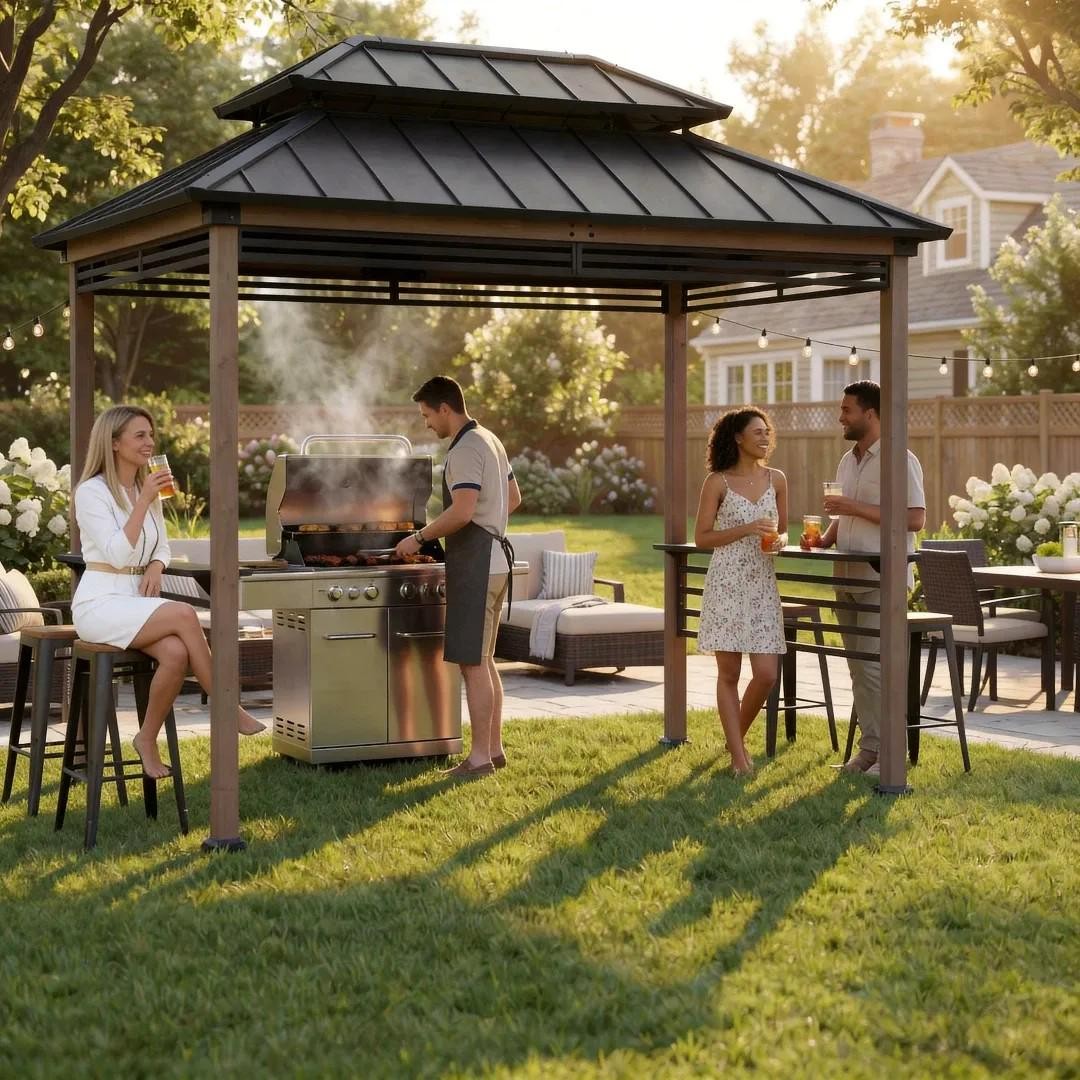
Match the Shelter to the Smoker’s Workflow
Smokers vary widely in height, lid movement, chimney position, firebox location, and fuel system. Measurements should be taken with every door and lid fully open. A grill canopy that appears spacious when the unit is closed may become restrictive when racks slide out or a side firebox requires attention.
Long cooks create repeated movement. Fuel may be added, water pans replenished, temperatures checked, and finished food transferred to a clean surface. The Grill Gazebo should permit these steps to occur in sequence without carrying raw food across the serving zone or forcing the cook into a narrow corner.
Shelves are valuable for heat-resistant gloves, probes, and seasoning, but they should not hold combustible packaging beside the smoker. A separate clean table can handle cooked food and carving. Fuel storage belongs farther away, protected from moisture yet separated from hot surfaces and drifting embers.
Roof runoff also deserves planning. Water should discharge away from electrical connections, walking paths, and the firebox. If rain is expected, the ground needs traction and drainage. A puddle beside a smoker creates a slip risk during the precise moment when a heavy pan or hot rack is being moved.
A thermometer display ought to remain visible without requiring the cook to lean across the firebox. Wireless probes can lower repeated opening, but receivers, cables, and batteries must stay dry and clear of heat. Reliable monitoring protects food quality while reducing unnecessary movement under the grill canopy.
Preserve Ventilation and Control Residue
Smoke must exit freely above and around the equipment. A grill canopy should not be treated as a hood unless it was specifically engineered and approved for that role. Soot accumulation on the underside of a roof may indicate poor placement, inadequate clearance, or a chimney path that directs exhaust toward the structure.
Grease builds slowly during extended cooking. Drip pans, shelves, handles, and the ground beneath the smoker require inspection after each use. Residue can attract pests, stain surfaces, and create fuel for a later fire. Mild soap and water may suit shelter cleaning, while the smoker itself follows its own maintenance instructions.
Wood, charcoal, pellets, and propane each introduce different storage and ignition concerns. The selected fuel ought to remain dry and stable, but not pressed against the Grill Gazebo frame or placed beneath a heat source. Ashes need a metal container and ample cooling time before disposal.
A smoker cover protects against storage weather only after the appliance is completely cold. Covering warm metal can trap moisture and heat, while a wet cover may encourage corrosion. Seasonal canopy fabric likewise needs to be cleaned and dried thoroughly before it is folded away.
The shelter’s footprint should also accommodate a safe resting surface for hot racks and pans. Placing them on a decorative table that is not heat resistant can damage the finish or start a fire. A metal or approved heat-resistant surface keeps the workflow controlled during unloading.
Evaluate a SUNJOY Grill Gazebo as a Complete System
SUNJOY offers fabric-top and hardtop cooking shelters in several roof forms and sizes. Depending on the model, these shelters may use steel, aluminum, or wood framing with weather-resistant roofs, hooks, and preparation shelves. The exact model must still be compared with the smoker’s dimensions, exhaust location, and manufacturer-required clearances.
A hardtop Grill Gazebo may supply a more permanent station, whereas a fabric grill canopy may be lighter in appearance and may require seasonal removal. Neither category is inherently preferable. Climate, snow exposure, anchoring conditions, maintenance capacity, and the planned length of the cooking season influence the decision.
The shelter should be anchored according to its manual and positioned where wind does not push smoke toward doors, windows, or occupied seating. Hanging accessories must not interfere with chimney flow. Added lights or electrical devices should be suitable for the environment and routed away from hot surfaces.
For an expensive smoker, lasting protection is produced by more than a roof. Correct clearance, clean fuel storage, grease control, safe access, and regular inspection matter throughout every long cook. A properly selected SUNJOY grill canopy can support that routine while leaving the appliance room to operate as designed.
Seasonal wind patterns may justify a different smoker orientation in spring and autumn. The SUNJOY grill gazebo itself should not be rotated casually after anchoring, but the appliance position within the approved clearances may be adjusted when the manual permits. Smoke ought to remain away from occupied openings.